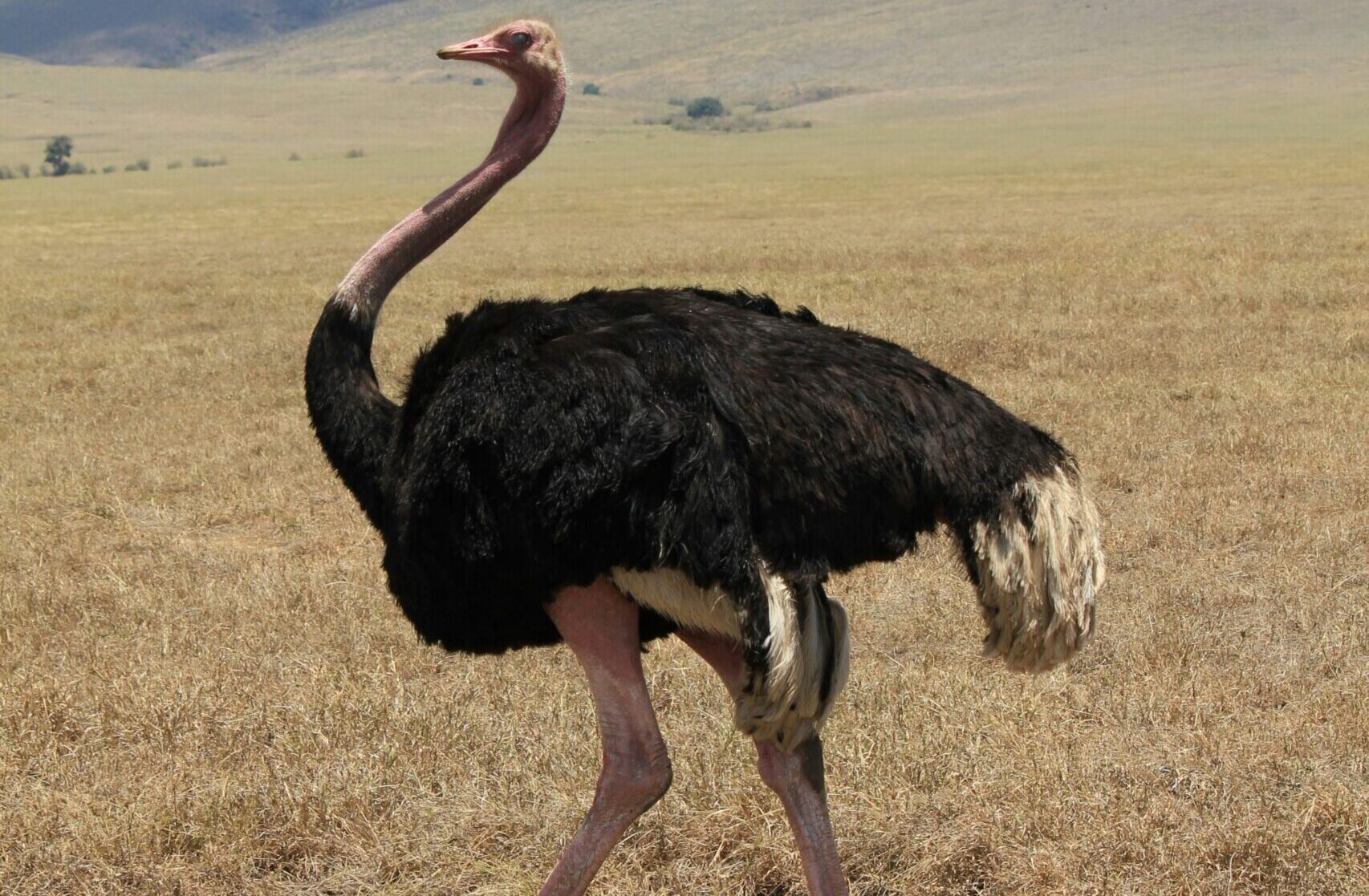
Ostriches are the largest living birds, and there are many common misconceptions surrounding them. You’ve probably heard that they’re prone to burying their heads in the sand when they’re scared, but is there any truth to this urban legend?
The tale about ostriches sticking their heads in the sand to avoid uncomfortable situations started circling around after naturalists and photographers observed this behavior in the wild. It turned it this was nothing but an optical illusion because ostriches’ heads are so small in comparison to their large bodies that it seems their heads are buried when they’re simply picking at the ground.
This behavior was observed because ostriches dig shallow holes in the sand to serve as nests for their eggs. They’ll also use their beaks to turn their eggs several times a day, creating the impression they’re sticking their heads right into the dirt when that’s not the case.
The signs of fear in ostriches are completely different. When faced with danger, they’ll try to blend into their surroundings in an attempt to become a lesser target. If they sense predators they can’t outrun, they’re prone to flopping to the ground, lowering their heads, and remaining still until the danger passes.